
CASE STUDY 02
CoachTracker
Designing a real-time passenger information experience for one of the UK's leading coach operators.
Evolved National Express CoachTracker from a native mobile experience into a responsive web product, making real-time journey information accessible across desktop and mobile devices.
Consumer Product • Passenger Experience • Responsive Web • Real-time Tracking

Project Snapshot
Client
National Express
Company
uTrack Software Solutions
Product
CoachTracker
Role
Lead UI/UX Designer
Timeline
2017–2018
Continued product evolution through 2023
Industry
- Transportation Technology
- Passenger Information
Responsibilities
- UX Design
- Information Architecture
- User Flows
- Wireframing
- Responsive Design
- UI Design
- Prototyping
- Prototype Validation
- Design Handoff & Collaboration
Team
- CEO
- CTO
- Project Manager
- Developers
- Infrastructure Engineers
- National Express Stakeholders
Live product
Context
A responsive passenger-information experience that evolved National Express's coach tracking service from native apps into an accessible web and mobile product.
National Express had already been using CoachTracker as a native iOS and Android experience, originally designed by me at uTrack. As mobile technology and product expectations evolved, maintaining separate native applications became increasingly costly.
uTrack proposed evolving the experience into a responsive web product that passengers could access directly from the National Express website, without downloading or maintaining a dedicated app. The challenge was to preserve the value of real-time tracking while creating a simpler, more accessible experience across desktop and mobile.
As the sole designer at uTrack, I led the UX and UI design from requirements and experience definition through delivery, working closely with National Express stakeholders, our technical team and developers to translate complex transport data into a clear passenger experience.
Product Scale
Passenger Information Suite
Sessions
Page views
CoachTracker
CoachTracker views
*Analytics represent the National Express passenger-information suite; CoachTracker views are shown separately.
Evolving CoachTracker
CoachTracker wasn't a new product. It evolved through multiple generations of native mobile applications before becoming a responsive web experience.
Product Evolution

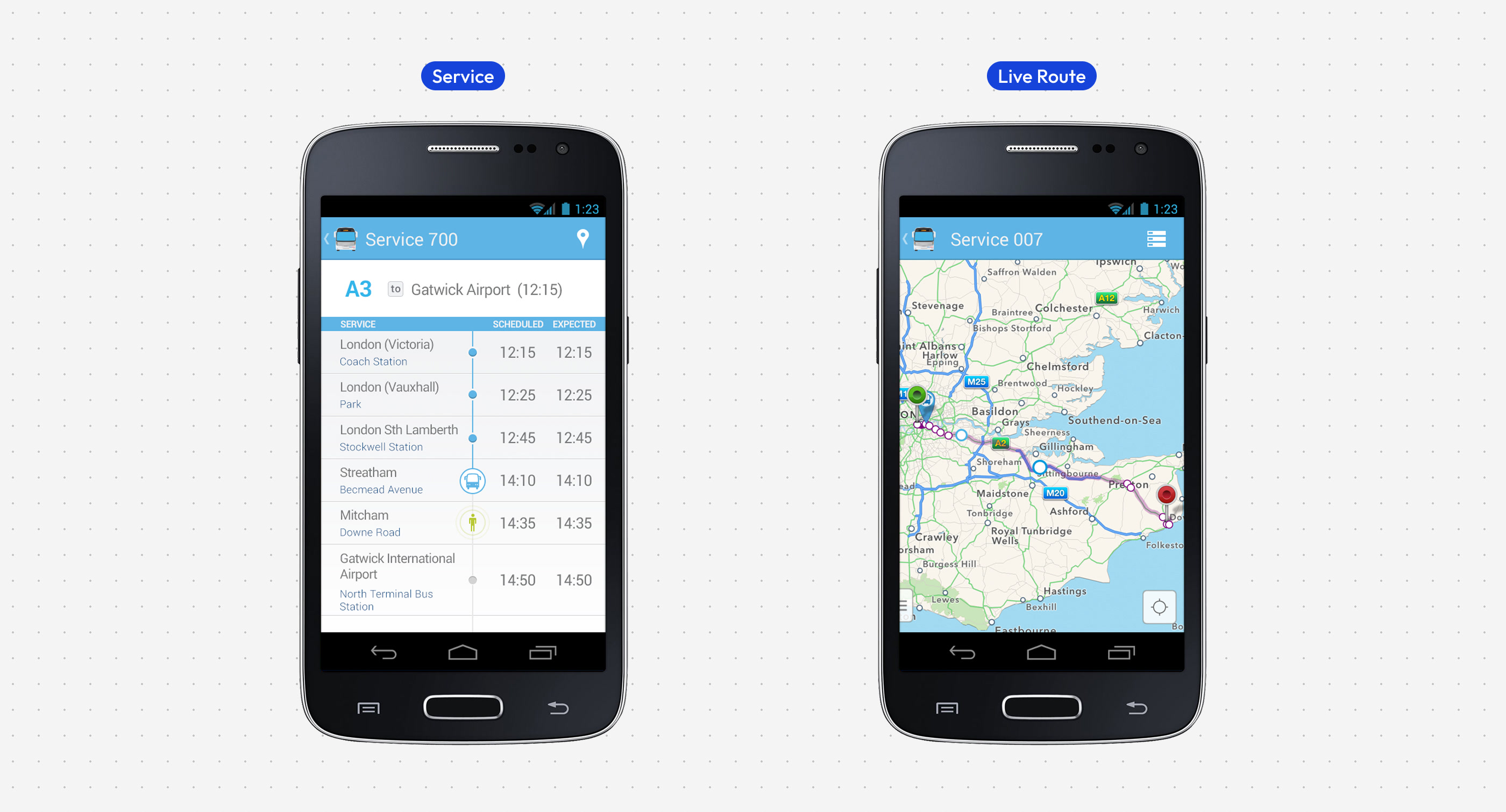
Native - V1
2013 - 2014
The original CoachTracker established the core experience for finding and following National Express services.
iOS + Android
Service & Journey
Passengers could view a service, follow its scheduled stops and compare scheduled and expected arrival times in a single journey view.
Native - V2
2015 - 2016
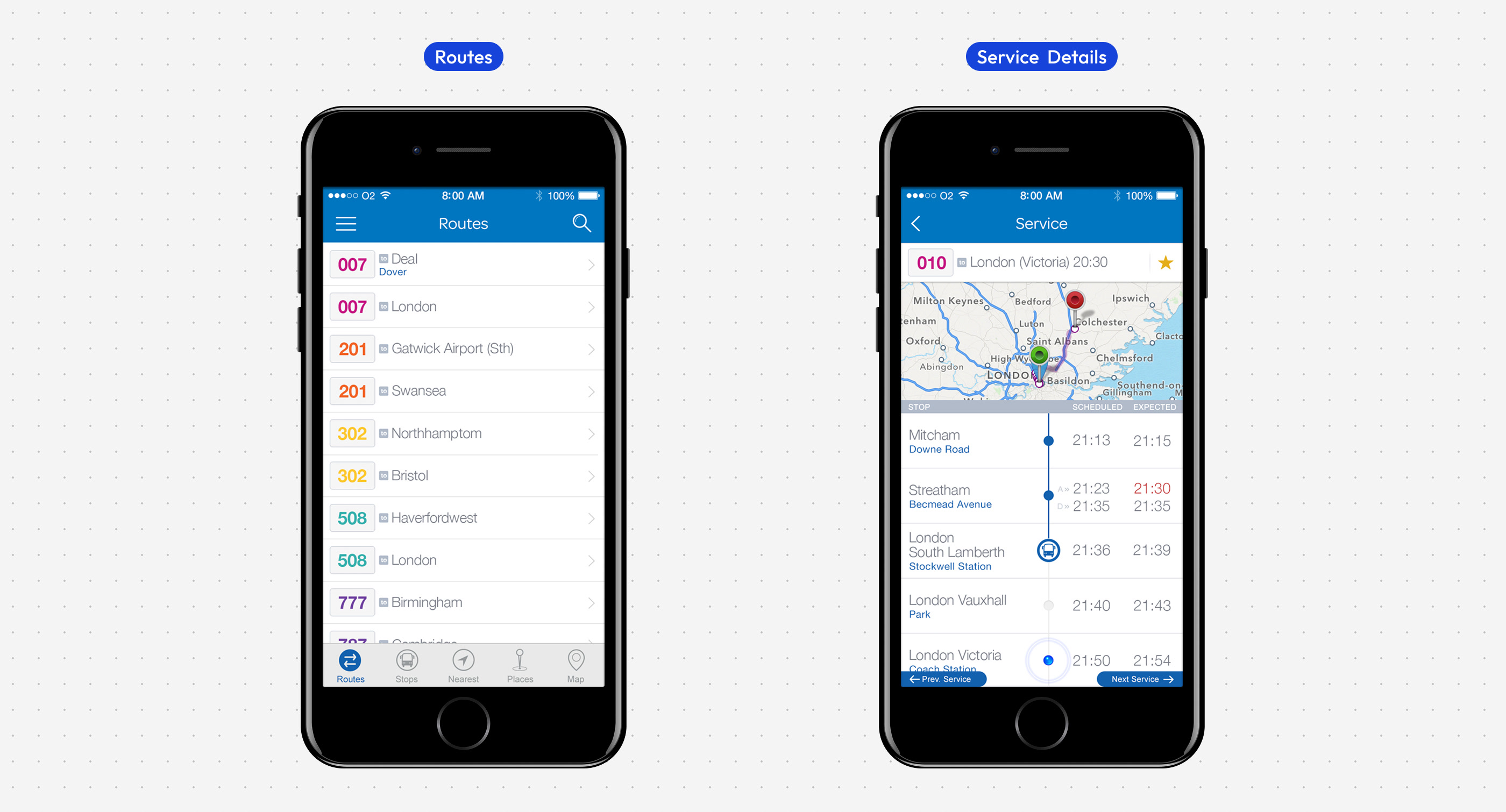
The second generation modernised the experience, restructuring navigation and expanding the Find My Coach journey across routes, stops, services and maps.
iOS + Android
Routes & Service Details
The experience made routes and services easier to explore, giving passengers clearer access to destinations, journey details, stops and live service information.
Responsive Web
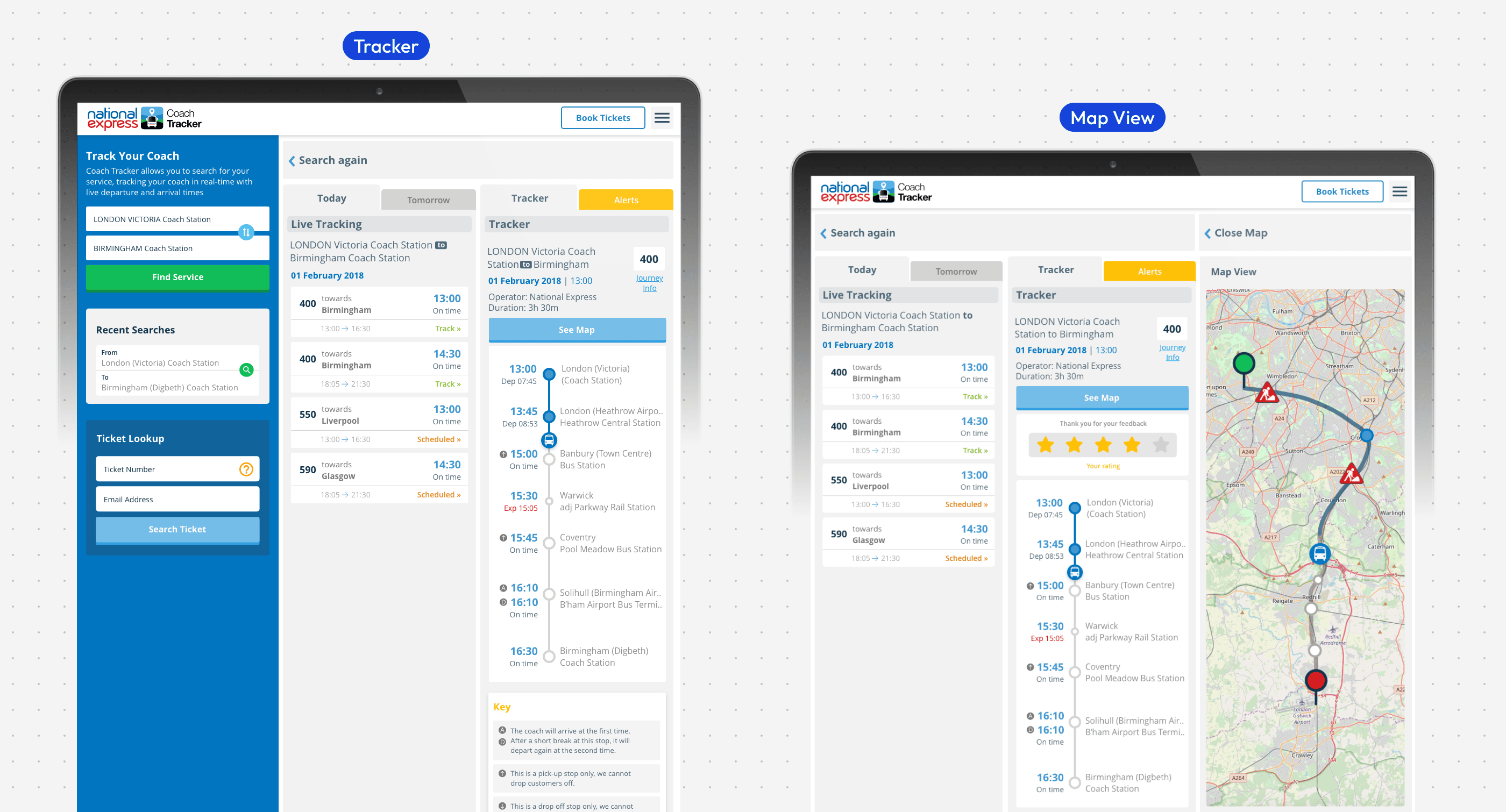
2017 - 2018
The experience evolved into a responsive web product, making the core tracking journey accessible across desktop and mobile without requiring a dedicated app.
Web + Mobile
Tracker & Map
The responsive experience brought service search, live tracking and route visualisation together across larger and smaller screens, creating a more accessible passenger experience.
The constant
The product evolved, but the core task remained the same.
Help passengers find their service, understand where it is, and follow their journey in real time.
The Design Challenge
CoachTracker was not a new product. It was an established passenger experience that needed to evolve with changing technology, user expectations and business needs.
Existing Product
Build from established behaviour
CoachTracker had already been used by National Express passengers through native iOS and Android applications. The responsive product could build on established behaviours rather than starting from zero.
Passenger Need
Make real-time information easier to access
The experience needed to give passengers quick access to service information, departure and arrival times, stops, delays and live vehicle location — particularly when travelling.
Business Need
Reduce platform dependency
Moving from native applications to a responsive web experience allowed National Express to offer CoachTracker without requiring passengers to install an app, while reducing the cost and complexity of maintaining separate mobile platforms.
Technical Reality
Design within a live data ecosystem
The experience relied on existing real-time transport data and uTrack's underlying platform. My role was to translate that information into a clear passenger-facing experience while collaborating with developers around feasibility.
Forces driving the redesign
➊ Platform access
Move beyond the app
Passengers should be able to access real-time coach information directly through the web, without downloading or maintaining a native application.
➋ Simplicity
Make complex information understandable
Live services contain a large amount of information — routes, stops, schedules, expected times and vehicle locations. The challenge was to present that information without overwhelming passengers.
➌ Scalability
Design a reusable foundation
The responsive experience needed to work across desktop and mobile while establishing a flexible foundation that could later be adapted for other transport operators.
Design Inputs
✅ Previous product experience
✅ Usage analytics
✅ National Express stakeholder feedback
✅ Existing real-time data platform
✅ Technical feasibility
From Requirements to Interface
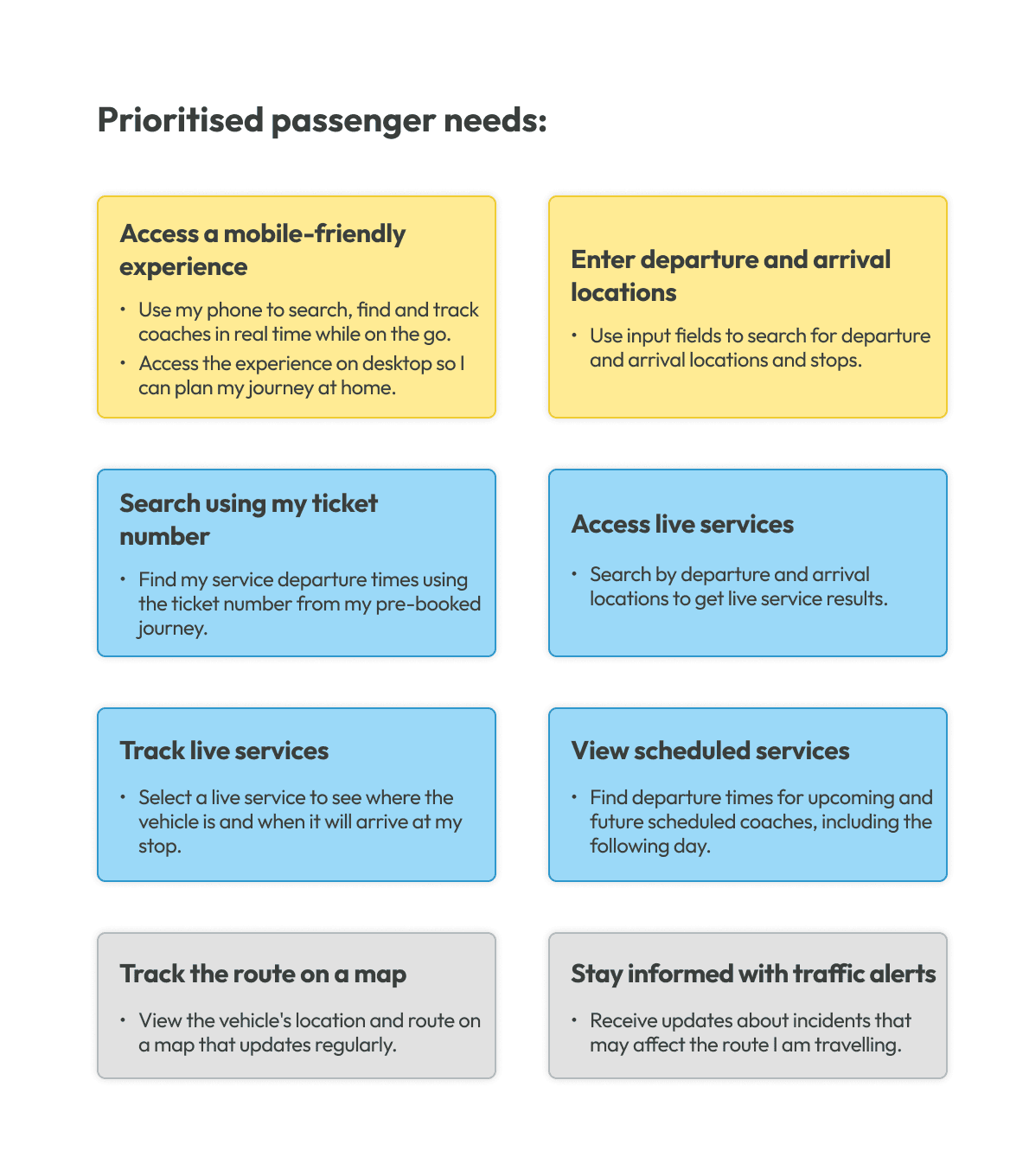
The experience evolved from a set of prioritised passenger needs into a simplified, responsive interface. I used these requirements to define the core journey, explore different structures, establish the visual system and prepare the experience for implementation.
Feature priorities
The initial requirements were organised around what passengers needed most: access to the service, clear live information and confidence while travelling. These priorities helped focus the experience around the tasks that mattered most.
📱 Access anywhere
Use the experience across mobile and desktop without relying on a native app.
🔍 Find services quickly
Search for services using departure and arrival locations.
🚌 Track live journeys
Follow a service and understand where the vehicle is and when it will arrive.
⚠ Stay informed
Receive relevant traffic and journey updates while travelling.
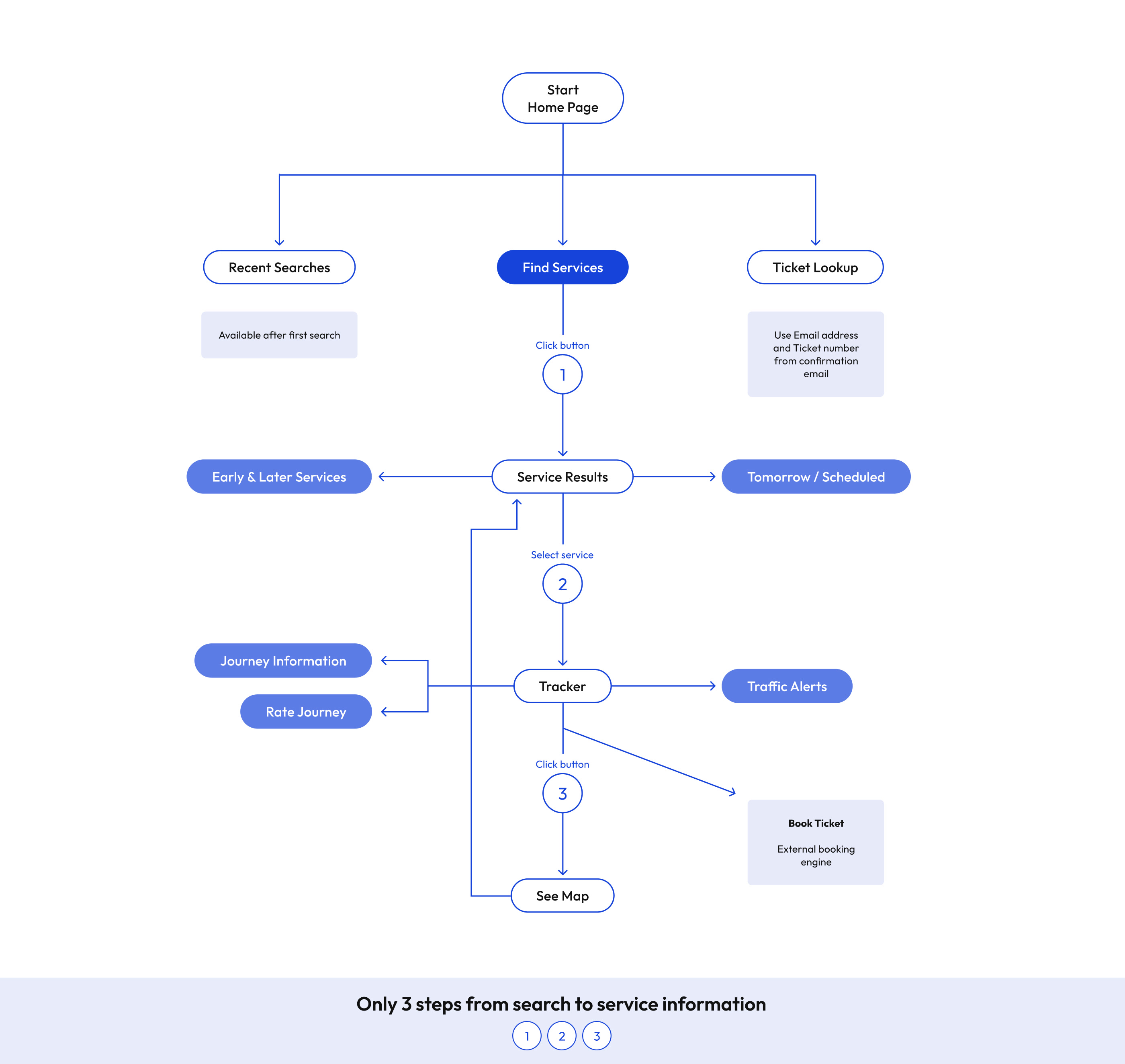
User flow
The core journey was mapped from the initial search through service selection and live tracking. Reducing the primary path to three steps helped keep the experience focused while still allowing access to supporting information such as journey details, maps and alerts.
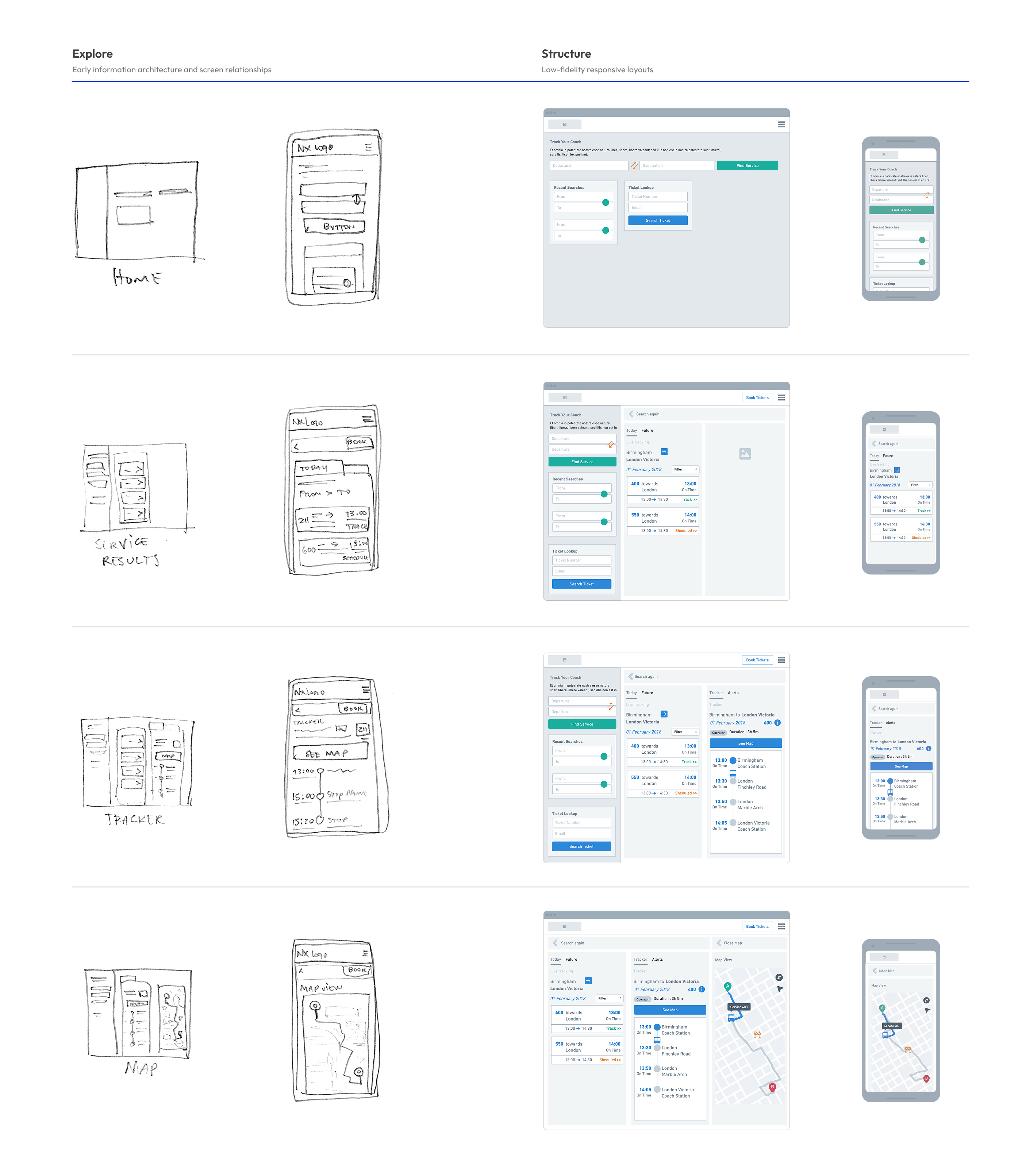
Sketches + Wireframes
Early sketches explored the main pages and relationships between search, service results, tracking, maps and alerts. These ideas were then translated into low-fidelity wireframes to test the structure across desktop and mobile before moving into visual design.
Design system
Once the structure was defined, I established a consistent visual language across typography, colour, buttons, icons and interface components. Custom iconography was also created to support transport-specific information and maintain consistency across the experience.

Prepare for implementation
The final interface was documented with detailed measurements, styles and component specifications to support a consistent handoff into development.

Transition
With the core journey, interaction structure and visual system established, the focus shifted to refining the experience across the key passenger scenarios.
Designing the Experience
With the product foundations already established, I focused on translating the familiar CoachTracker experience into a responsive web model without losing the clarity and immediacy of real-time tracking.
From Native to Responsive
The responsive experience built on the interaction model passengers already knew, while adapting it for a broader range of devices and contexts.
Preserve what worked
The responsive experience carried forward the core behaviours passengers already understood: finding a service, following its stops and checking its live progress.

Make live information understandable
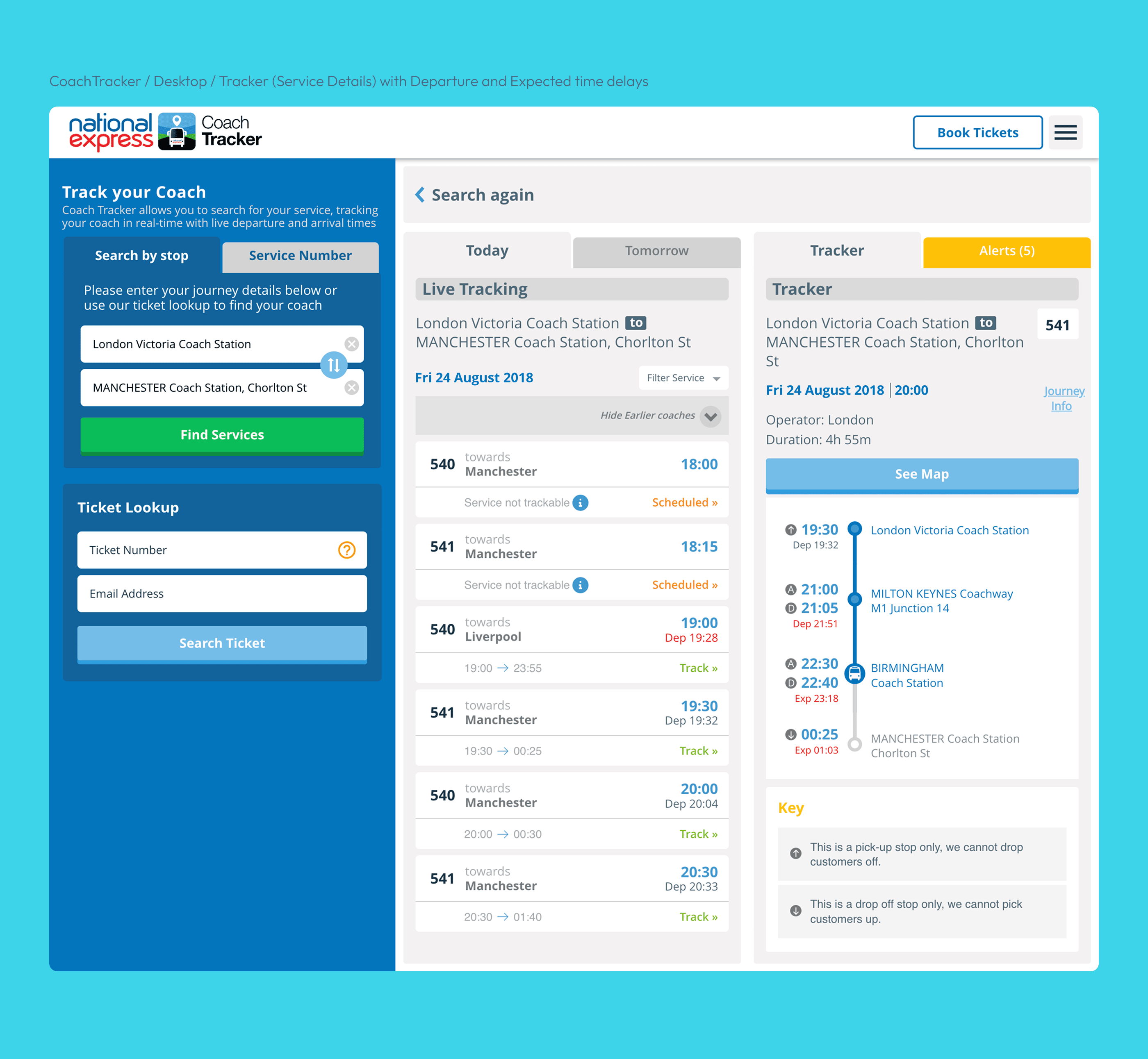
Real-time transport data can be complex. The interface organised services, stops, scheduled times, expected times and live status into a clear journey narrative.
Design for the journey
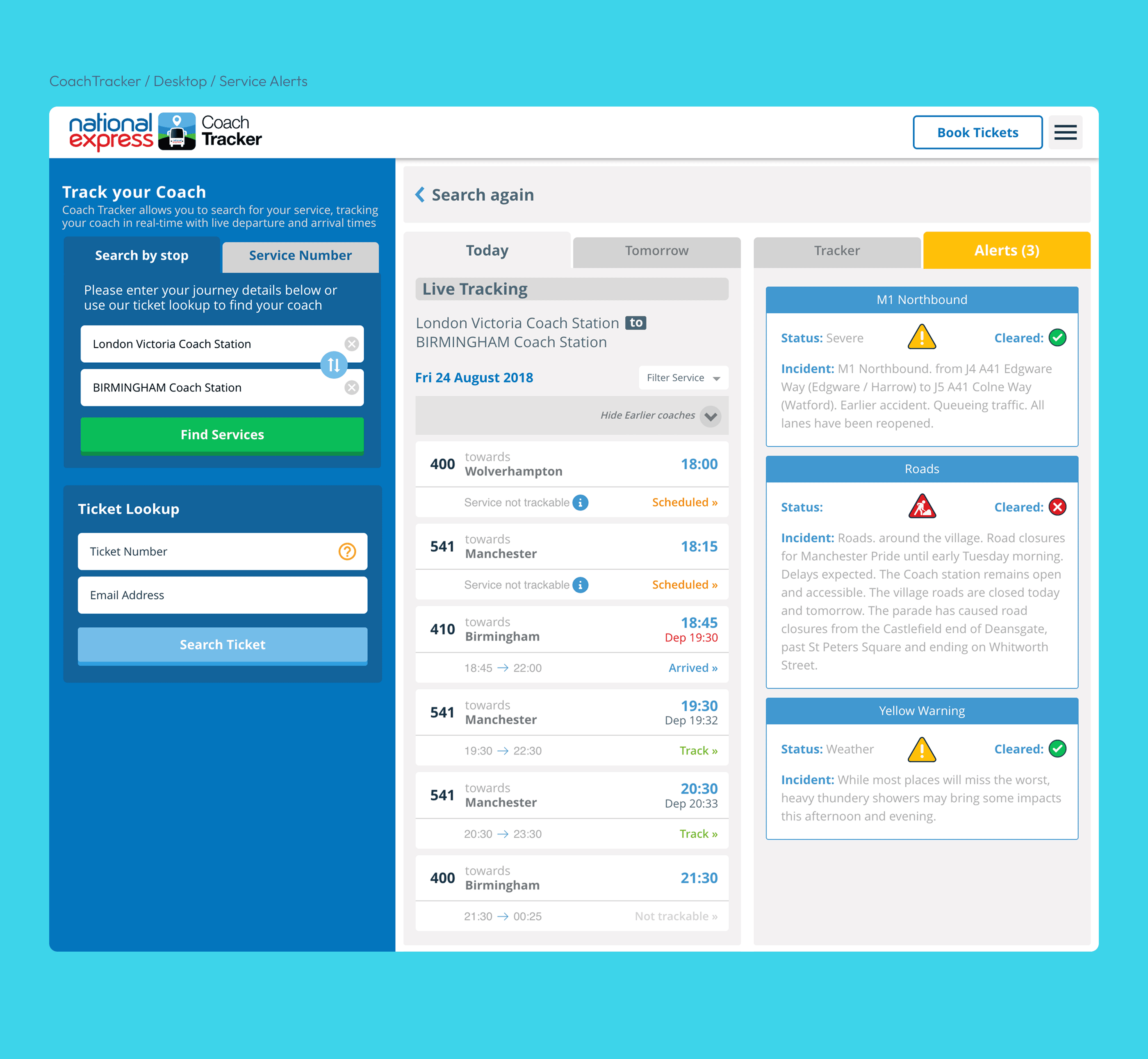
CoachTracker supported the passenger journey from finding a service through to following it in real time, with tracking, alerts and map information available when needed.

Design responsively
The experience adapted the same core information and interactions across desktop and mobile, allowing passengers to access CoachTracker without depending on a native application. While the interface changed, the passenger’s mental model remained familiar — reducing the complexity of getting into and using the experience.

Design Principles
Preserve familiarity
The responsive experience retained the established service-tracking model rather than introducing a new interaction pattern.
Reduce friction
The experience made tracking accessible directly through the web, particularly on mobile.
Simplify complexity
The experience turned real-time operational data into information passengers could understand quickly.
The goal wasn't to reinvent CoachTracker; it was to make an established experience work better in a new context.
The Final Experience
The redesigned CoachTracker brought the established tracking experience into a responsive web model, giving passengers a clearer way to find their service, follow its progress and stay informed throughout the journey.
Platform Showcase
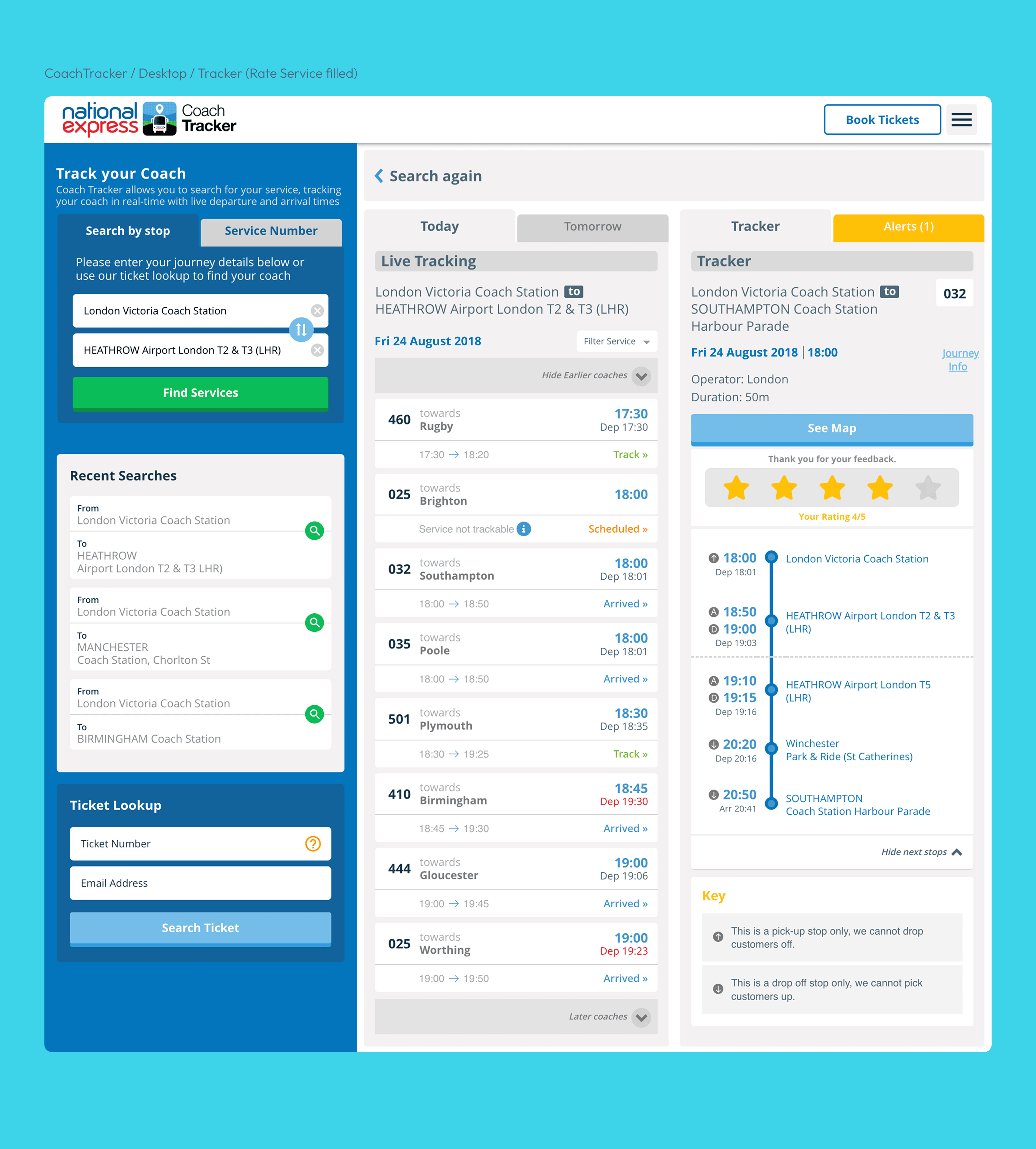
The following gallery showcases representative interfaces from across the platform. Rather than documenting every screen, it focuses on the experiences that best illustrate the product's overall design language.

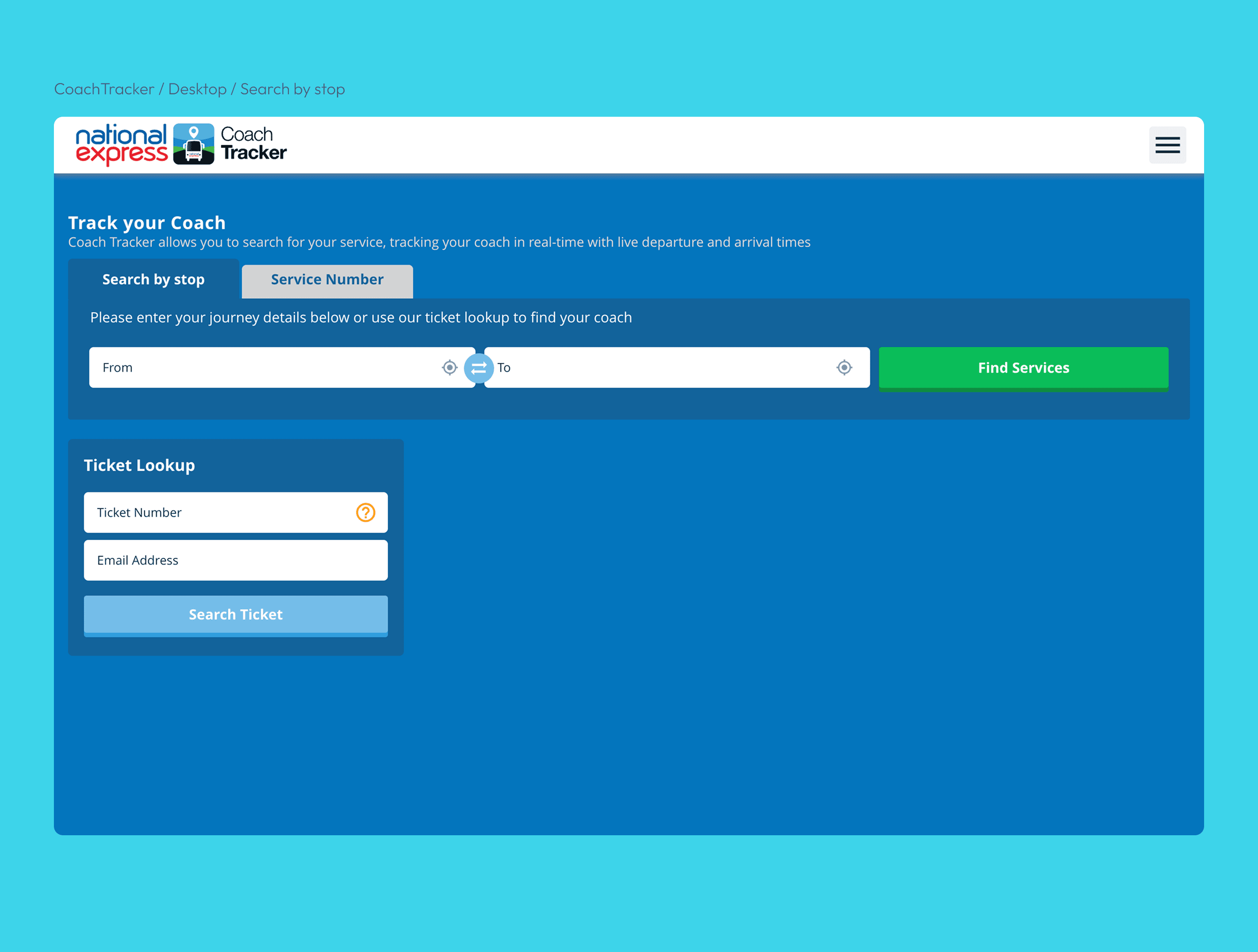
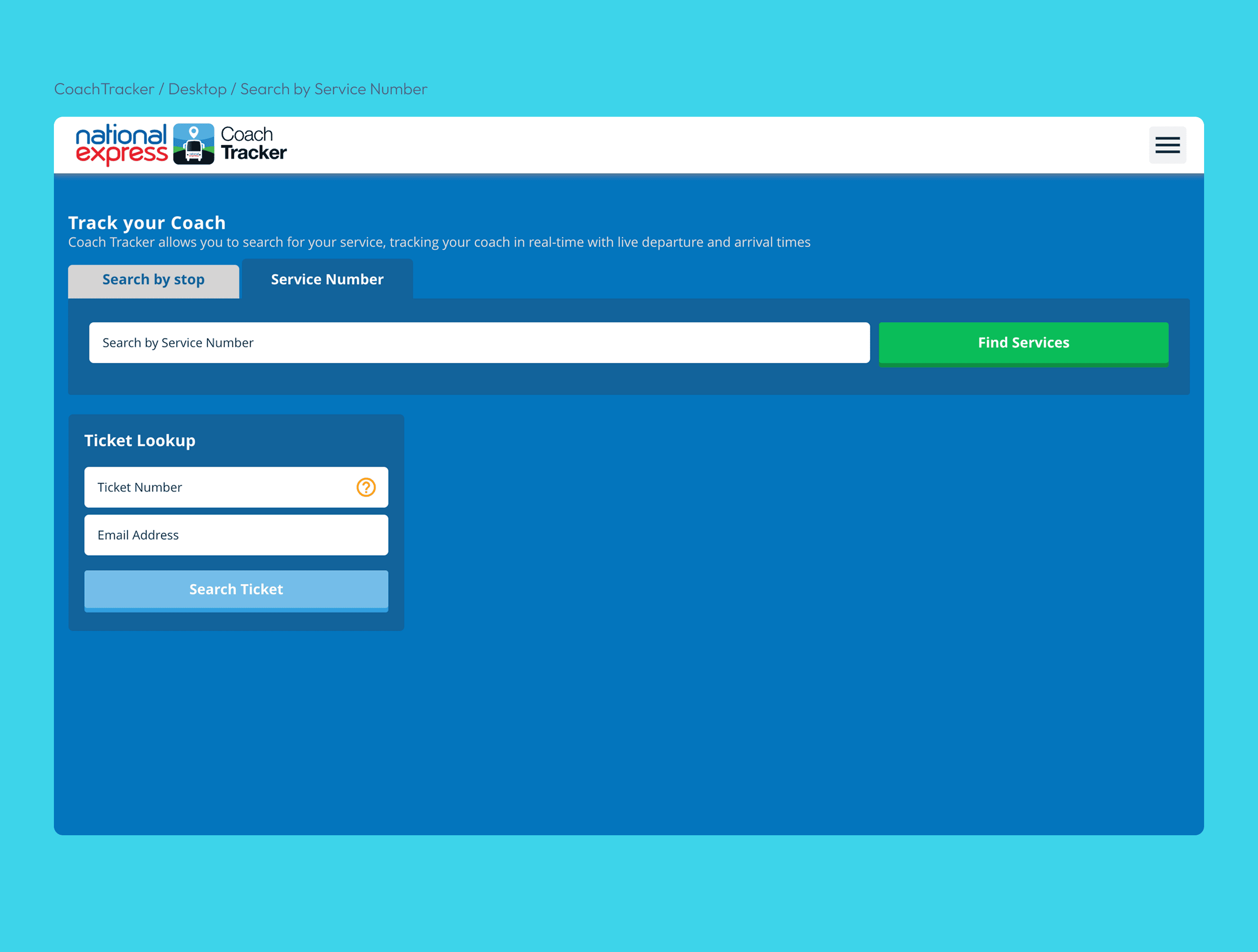
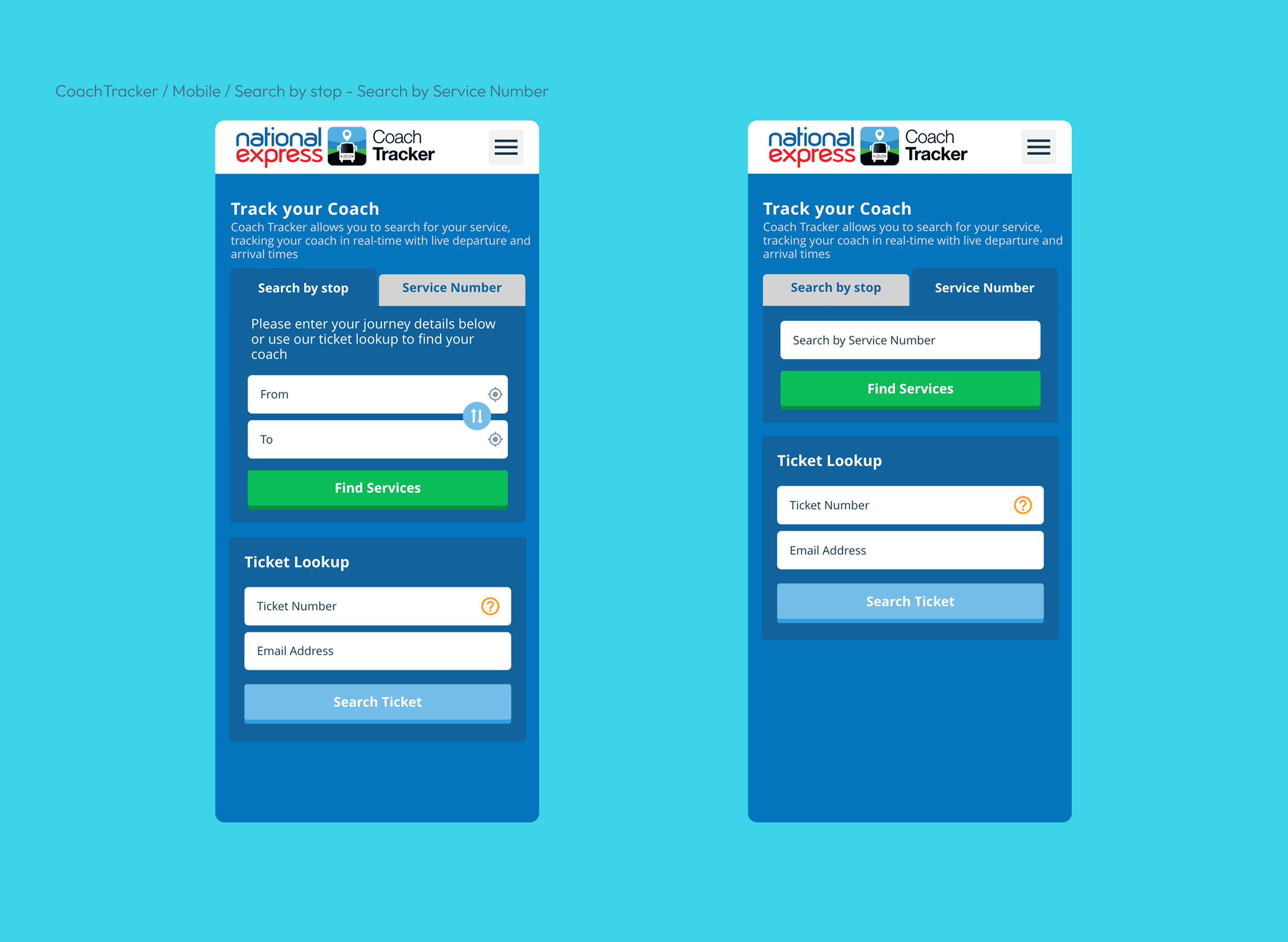
Find your service
Start with the journey, not the navigation.


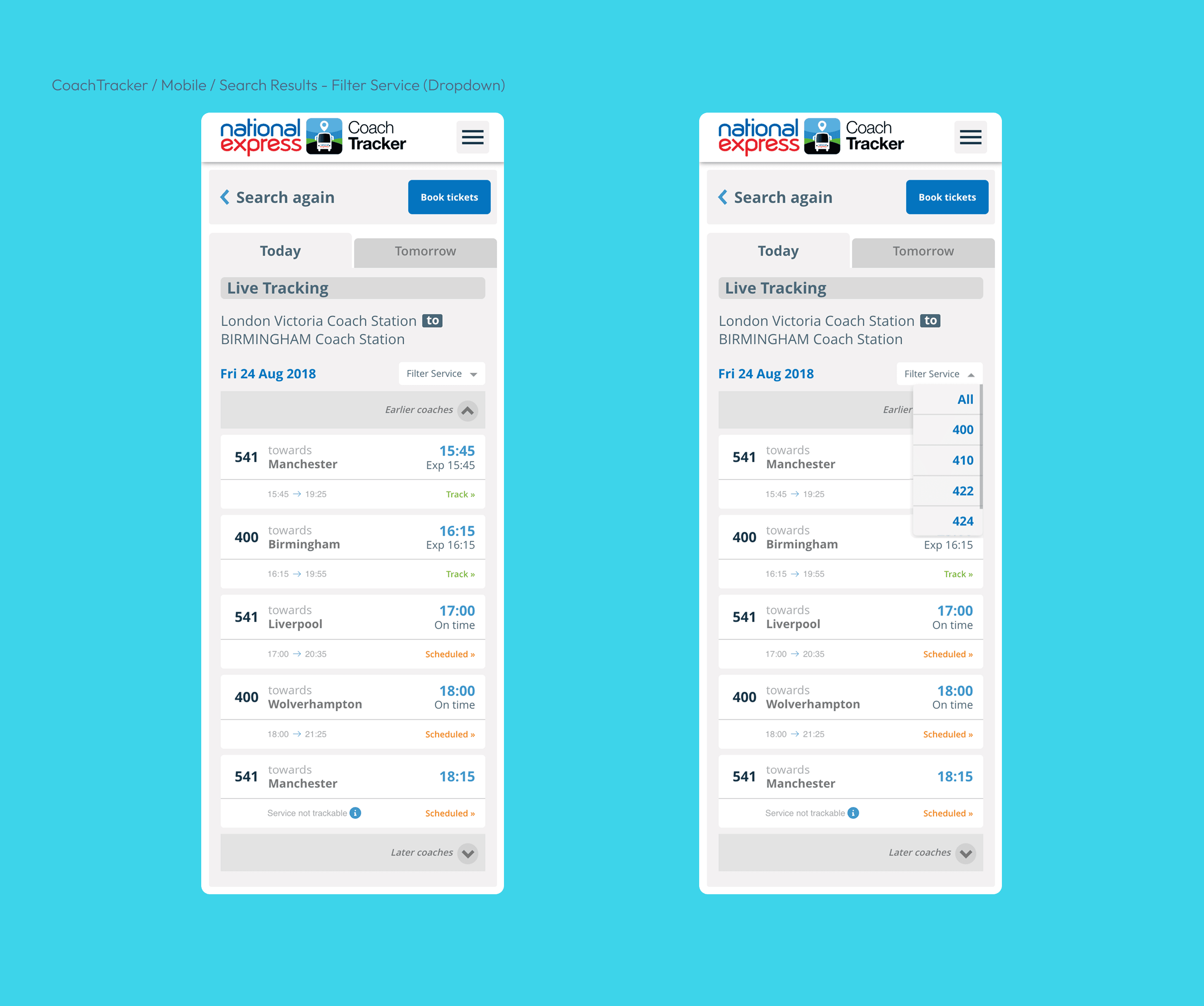
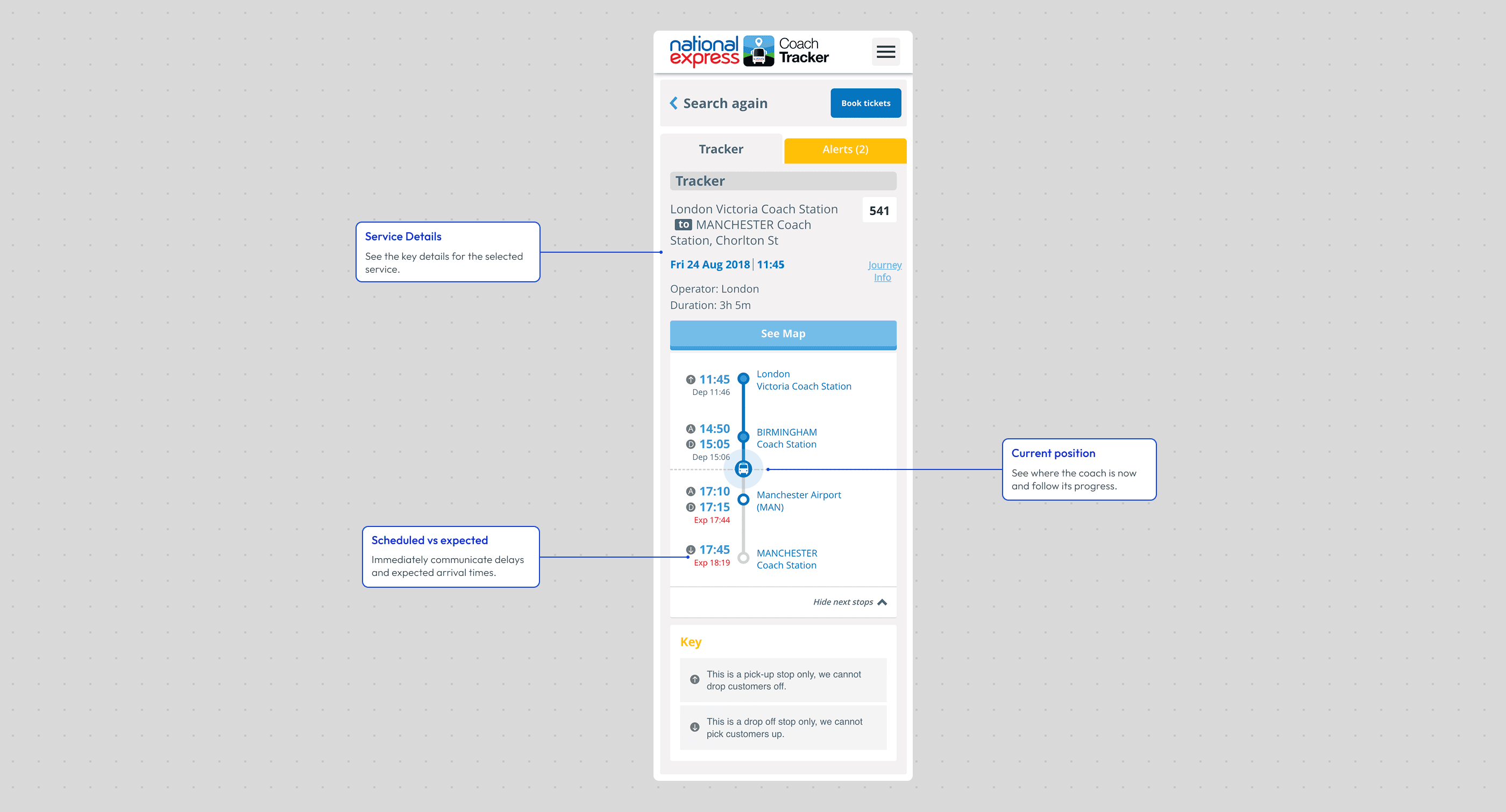
Follow the journey
Turn live operational data into a journey passengers can understand.




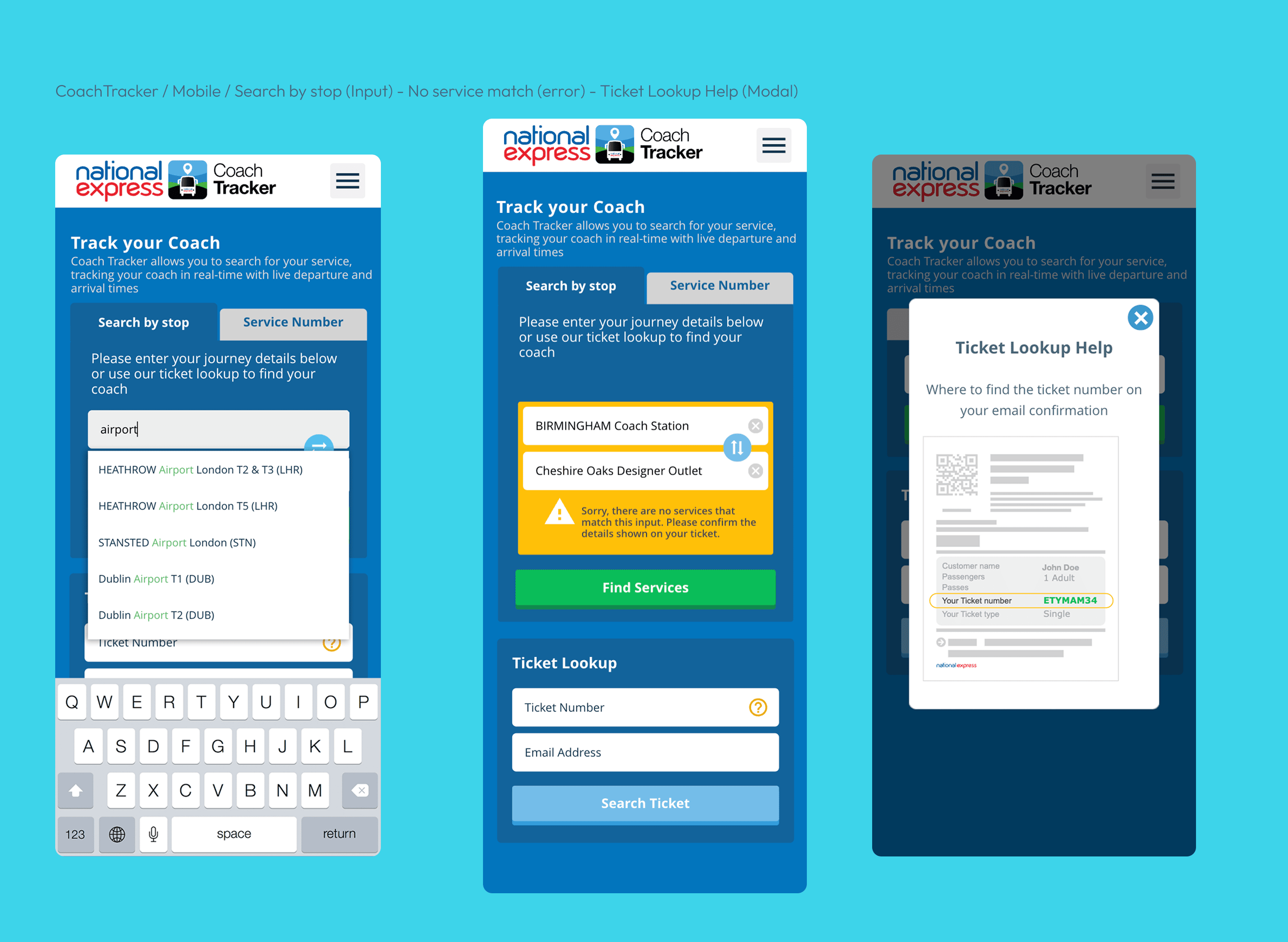
Stay informed
Give passengers timely information when the journey changes.


Desktop, Tablet & Mobile

A familiar experience, rebuilt for a new context
CoachTracker evolved from a native mobile service into a responsive passenger-information experience without losing the behaviours passengers already understood. The result brought service discovery, live tracking, journey progression and disruption information into one accessible experience across web and mobile.
My Contribution
I led the end-to-end design of CoachTracker, from defining the interaction model and information architecture through wireframing, interaction design, visual design, prototyping and developer handoff. Working closely with National Express stakeholders and the development team, I translated passenger needs and product requirements into a responsive experience across web and mobile.
Passenger Information Suite
As the product evolved, I also designed two complementary passenger-information experiences for National Express: Timetable Finder and Route Map. Together with CoachTracker, I brought these experiences into a connected Passenger Information Suite, giving passengers a consistent way to find services, explore the network and access journey information through a shared navigation and experience model.

One shared navigation connecting the three passenger-information experiences.
Timetable Finder
A responsive timetable experience that helped passengers find scheduled coach services by searching departure and arrival locations, making it easier to plan journeys and check upcoming departures.

Portfolio project coming soon
Route Map
A responsive network exploration experience that helped passengers understand routes, stops and destinations across the National Express network, providing a visual way to explore available services.

Portfolio project coming soon
Impact
CoachTracker became part of a broader passenger-information platform, helping passengers find services, follow journeys in real time and stay informed when conditions changed.
Passenger Information Suite
Sessions
Page views
Average views per session
CoachTracker
CoachTracker views
*Analytics represent the National Express passenger-information suite; CoachTracker views are shown separately.
Reflection
The most valuable part of CoachTracker was not simply turning a native application into a responsive web experience. It was learning how to preserve the behaviours passengers already understood while making complex, real-time information easier to access and act on.
The product later became the foundation for additional passenger-information products, reinforcing the value of designing the experience as part of a wider system rather than as a standalone interface.
*Screens shown reflect the delivered product experience, with dates updated to represent the original project timeframe.
Trademark & Portfolio Use Notice
This case study presents selected interface designs and product concepts created as part of my work while employed by uTrack Software Solutions on the CoachTracker platform for National Express.
CoachTracker, Timetables, Route Map and National Express logos are trademarks of their respective owners and are displayed for portfolio attribution purposes only.
All trademarks, service marks, logos, and brand names are used solely for identification, attribution, and portfolio demonstration purposes. No affiliation, sponsorship, endorsement, or ownership is claimed by this portfolio website or by Carlos Anazco outside of the professional work performed during the original engagement.
UI layouts, workflows, and visual examples shown here are presented exclusively to demonstrate my contribution to the product design process and user experience work.
Thank you for reading.
More projects are coming soon, including Unity.
Enjoyed the case study?
If you're looking for a Senior Product Designer to help shape thoughtful digital products, I'd love to hear about your next challenge.